
Rats In A Sack
As the Minnesota narrative spins out of its control, the administration improvises.

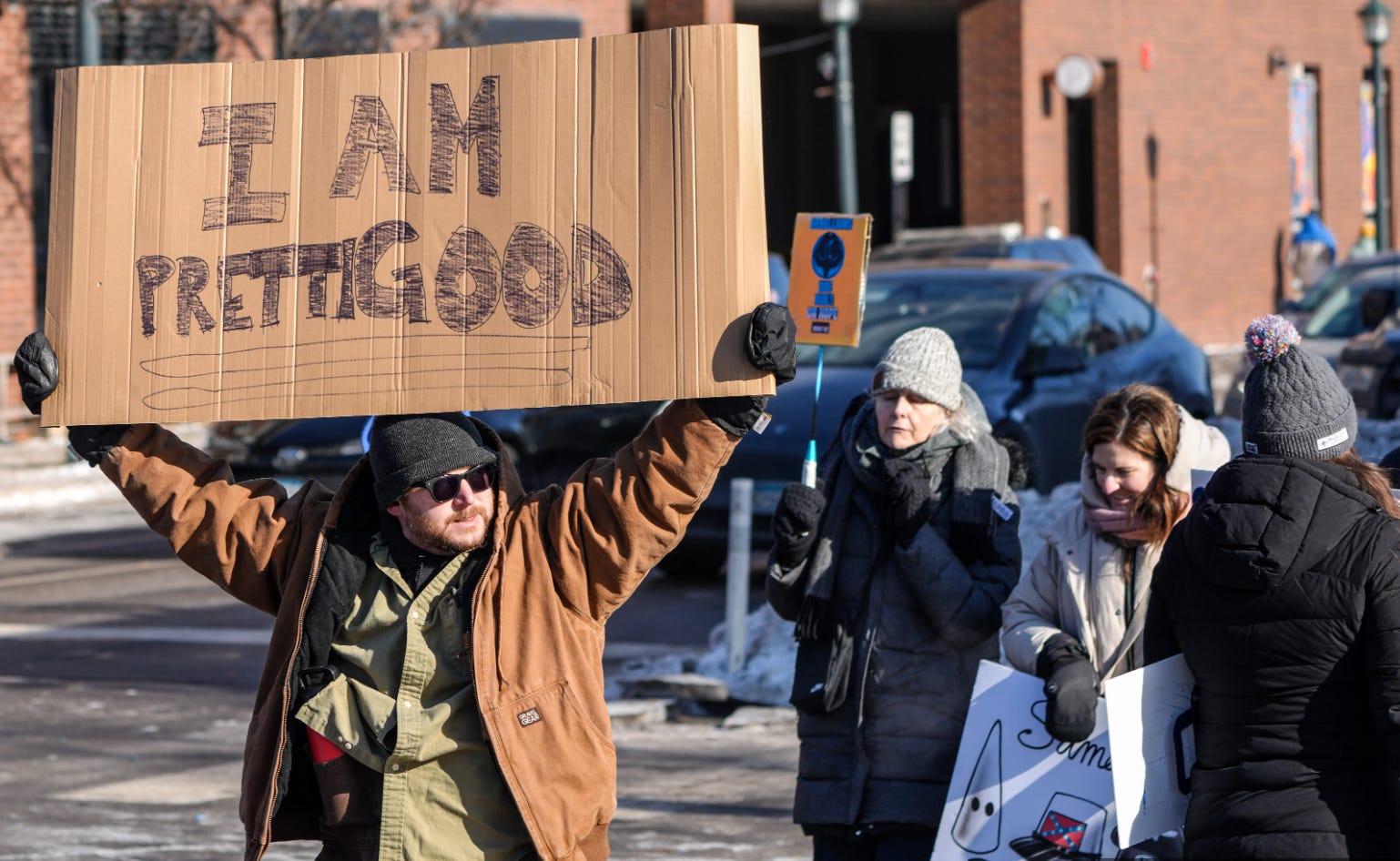
With the Trump administration’s credibility unravelling further this week, pushed over the edge by its own collectively disingenuous handling of the death of Alex Pretti at the hands of federal agents, an umoored blame game briefly intensified among Donald Trump’s acolytes before there appeared, once more, to be virtually zero consequences.
Stephen Miller jumped from initially calling Pretti an “assassin” and a “domestic terrorist” to acknowledging that CBP officers had possibly “ignored protocol” during the fatal incident.
Amid growing talk of impeachment, DHS Secretary Kristi Noem claimed that everything she did over the past few days had been directed by either Miller or the president. It’s unlikely that just “following orders” will work as a defense, but with Trump obviously keen to keep his firings to a minimum in contrast to the HR chaos of his first term, she still has her job.
So far the only “casualty” – apart, of course, from Alex Pretti – has been CBP head honcho Greg Bovino who, depending on accounts, was either fired, demoted, forced into early retirement or, justifiably, thrown under the bus. He was replaced in Minnesota by border “czar” and Cava takeout afficionado Tom Homan – but it’s still unsure what, if anything, might have actually changed in terms of policy.
At his introductory presser yesterday, Homan talked about “drawing down” the numbers of immigration agents on the streets and how operations would be “safer, more efficient.”
According to Minnesota Gov Tim Walz, meanwhile, in a phone call president Trump had compared the situation in Walz’s state to recent events in Venezuela, in which around 80 people had been killed during the US’s seizing of Nicolás Maduro.
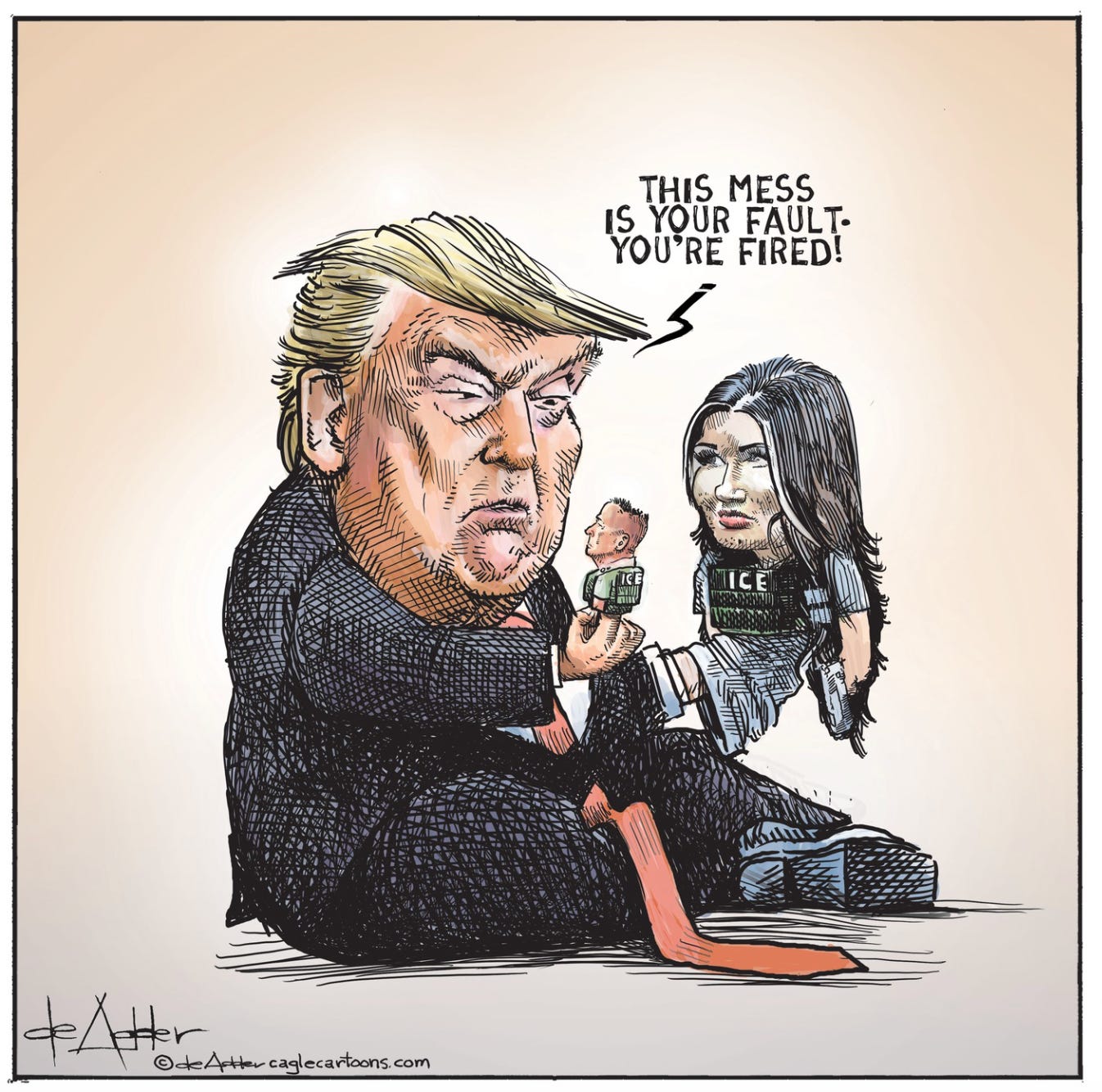
As always, the one constant on the deck of this particular Titanic is always that nothing is ever Trump’s fault.
As Phillips O’Brien wrote this week, the president is inevitably “whitewashed.” Given Trump’s role in escalating the role of ICE to where it currently stands,O’Brien says, recent events in Minneapolis have been “entirely predictable.”
“So what we have seen is ALL Trump’s fault. He created the force, he supported the force, he lionized the force and he used them as his tool to cause retribution. You would think that this would at least be acknowledged, but oh no. Now that ICE did exactly what it was always going to do under Trump’s encouragement, now the responsibility is down to anyone but Trump.”
But beyond just the personalities in a cabinet grossly underqualified for their positions, with each passing day the president appears disconnected and happy to allow his underlings to fight among themselves, Trump would appear to be destroying one of the GOP’s strongest campaign issues.
Yet there’s the rub – there is still somehow 38 per cent of the country who “approve” of how Trump is doing his job, seemingly regardless of anything that happens in Minnesota from here on out.
There was a disturbing assault this week on a local member of congress, when Rep Ilhan Omar – who has of course frequently been personally attacked by Donald Trump’s rhetoric – was sprayed with some kind of liquid by a man at a town hall meeting. From the footage, the guy looked like he was lucky the event’s security got to him before she and her balled fist did.
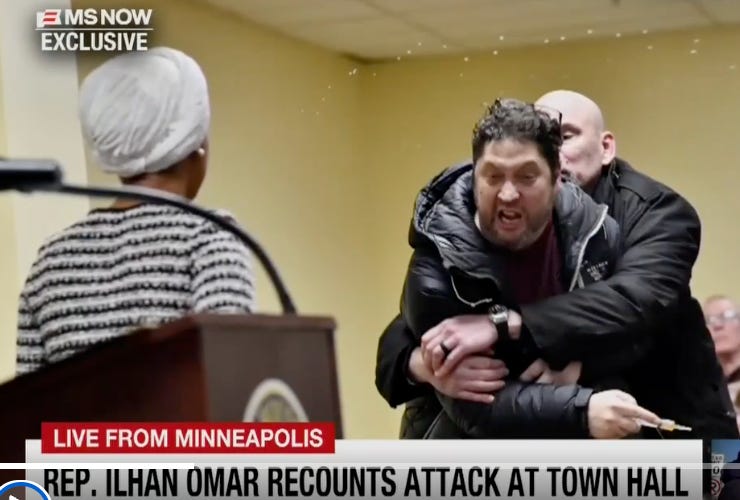
At a press conference afterwards, Omar said:
“Blame is very interesting, but facts are more important, and what the facts have shown since I’ve gotten into elected office is that every time the president of the United States has chosen to use hateful rhetoric to talk about me and the community that I represent, my death threats skyrocket.”
Adam Serwer has another excellent piece at The Atlantic this week about what makes Minnesota special and why its communities have collectively pushed back the way they have.
“If the Minnesota resistance has an overarching ideology, you could call it “neighborism”—a commitment to protecting the people around you, no matter who they are or where they came from. The contrast with the philosophy guiding the Trump administration couldn’t be more extreme. Vice President Vance has said that “it is totally reasonable and acceptable for American citizens to look at their next-door neighbors and say, ‘I want to live next to people who I have something in common with. I don’t want to live next to four families of strangers.’” Minnesotans are insisting that their neighbors are their neighbors whether they were born in Minneapolis or Mogadishu. That is, arguably, a deeply Christian philosophy, one apparently loathed by some of the most powerful Christians in America.”
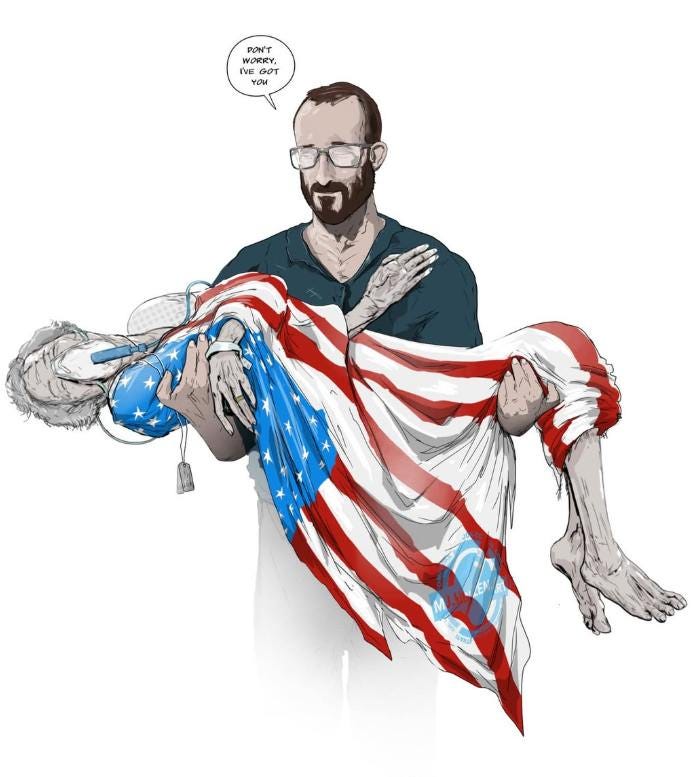
Illustration by MJ Hindler (via Banksy & Friends)
*
There was an ominous event this week in Fulton County, Georgia, when FBI agents raided the local election facility apparently as part of Trump’s desire to personally “re-litigate” the 2020 election. Tulsi Gabbard, still staggeringly Director of National Intelligence, was apparently on site for the operation, despite the fact that she is legally prohibited from taking part in domestic law enforcement.
Like us all, the good folks at Lawfare have plenty of questions.
See Also:
ICE Agents Fatally Shoot Man in Minneapolis
Pretext And Provocation, With Little Pretense
January 6 Riot ‘Doesn’t Happen Without Trump’
**
The Next Distraction?
With a massive DOJ drop of Epstein materials today sure to occupy minds over the weekend, the White House apparently continues to weigh military action against Iran.
Mostafa Salem writes at CNN that Iran may be “wounded, but still dangerous.”
“Two US officials told CNN that Tehran’s military capabilities, even if far outnumbered and much older than modern US systems, make a decisive US strike on the country far more difficult.
“Tehran has repeatedly warned that it would retaliate against US allies in the region if attacked. When US bombers struck Iranian nuclear facilities in the summer, Iran launched an unprecedented missile strike in Qatar, targeting al-Udeid Air Base, the largest US military installation in the Middle East.”
After a build-up of US forces in the Gulf region and warning Tehran that “time was running out” for a deal on its nuclear programme (the same one apparently the US “obliterated” in the summer), Trump said today that Iran wanted to make a deal, but Iran’s foreign minister said no talks between the sides were planned.
Politico reports that a poll shows any action against Iran would likely go down well with the MAGA base – that 38 per cent we mentioned earlier – having “embraced the administration’s aggressive use of military force abroad and would strongly support more.”
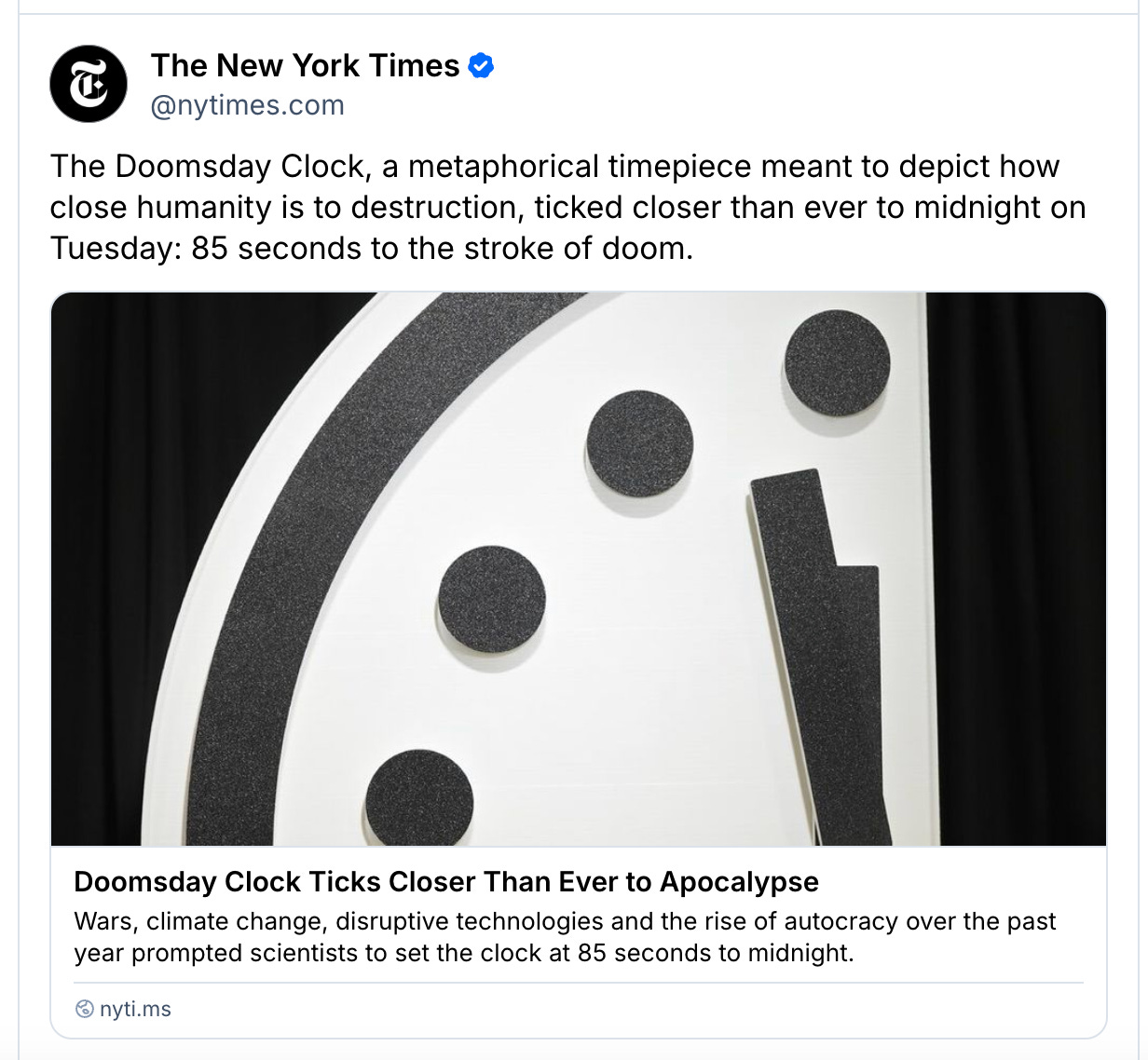
In terms of real conflicts still unresolved, with combined casualties in Russia’s war on Ukraine apparently nearing two million and climate warnings continuing apace with every day, it was probably no surprise that “the” clock is ticking…
See Also:
The Only Restraint Is ‘My Own Morality’
‘Everlasting Consequences’ (From June)
Of Bombs and F-Bombs (From June)
Trump Running Short Of Epstein Options (From November)
**
The Resistance Spreads
There’s been anger and confusion in Italy over the proposed use of ICE agents at the Winter Olympics, ostensibly on “security” duties but likely also on alert for anti-Americanism abroad ahead of showcase events like the World Cup, WBC and Summer Olympics; perhaps even as a way of expanding the sophisticated surveillance technology they’ve been using in the US.
Sheera Frenkel and Aaron Krolik at the New York Times report how agents have been using “facial recognition, social media monitoring and other tech tools not only to identify undocumented immigrants but also to track protesters.”
“ICE is using two facial recognition programs in Minnesota, [current and former officials] said, including one made by the tech company Clearview AI and a newer program, Mobile Fortify. The agency is also using cellphone and social media tools to monitor people’s online activity and potentially hack into phones. And agents are tapping into a database, built by the data analytics company Palantir, that combines government and commercial data to identify real-time locations for individuals they are pursuing, the current and former officials said.”
At home, it was a big week for culture – that is, showing who has it and who doesn’t. A slavery exhibit was removed in Philadelphia, just in time for February’s Black History Month.
Philip Glass pulled his new work on Abraham Lincoln from performance at the Kennedy Center. But the hall still hosted the Jeff Bezos-funded Melania documentary – which The Guardian described as “gilded trash” and “dispiriting, deadly and spectacularly unrevealing.”
And, thank God, Bruce Springsteen released a song for Minneapolis that he wrote after the death of Alex Pretti, then joined Tom Morello at an ICE protest in the city today for its first public performance.
Finally, with the arrest of journalists including Don Lemon, over his coverage of the recent Minneapolis church protest, it’s worth eavesdropping on this morning’s podcast conversation between Prof Timothy Snyder and Ava DuVernay. Prof Snyder writes:
“Today is a good day to talk about the First Amendment. Not abstractly, and not nostalgically, but concretely. Who is being prevented from speaking? Who is being punished for witnessing? Who benefits when journalists are made afraid?
“It is also a good day to celebrate journalists. Not because they are perfect—they are not—but because their work makes self-government possible. Journalism is how power becomes visible. It is how facts enter public life. It is how a society argues with itself without tearing itself apart.
“Ava reminded me, in her own way, that storytelling is a form of civic care. Journalists practice that care every day, often at personal risk. When we defend them, we are not taking sides in a culture war. We are taking sides with democracy.
“So I encourage you to talk about the First Amendment today. Talk about it with friends, students, colleagues. Ask what it requires of us now—not in theory, but in practice. And take a moment to thank a journalist.
“History is watching us, too.”
See Also:
Masquerading (From August)
Certain Things Are Set In Stone (From May)
***
As always, thanks for reading. When I started this project in 2022, I simply did not think how wildly out of whack things in the political world would become; all while sports continue to show the face of a society functioning with what passes for “normality”.
As for how all of this ends – and what might come after – I have no idea. And if anyone tells you they do, they’re wrong. Unpredictability at home and abroad has become the touchstone of how we have decided to govern ourselves and there will be plenty of collateral damage before the dust clears.
The two links in the above paragraphs change with each weekly column – all the pieces are definitely worth reading. They’re all linked here:
*
During the regular season I aim to write a baseball-related post midweek and a politics wrap at weekends. As you might expect, one has been way more sane than the other.
You can find a full States of Play archive here.
I’m back to a roughly once-a-week post now throughout the off-season, when I’m hoping to feature some more Q&A write-ups and produce some new content for the site.
Let me know what you’ve enjoyed or what you haven’t? And if you think you might like to take part and talk about your memories of baseball and politics, drop me a line?
*
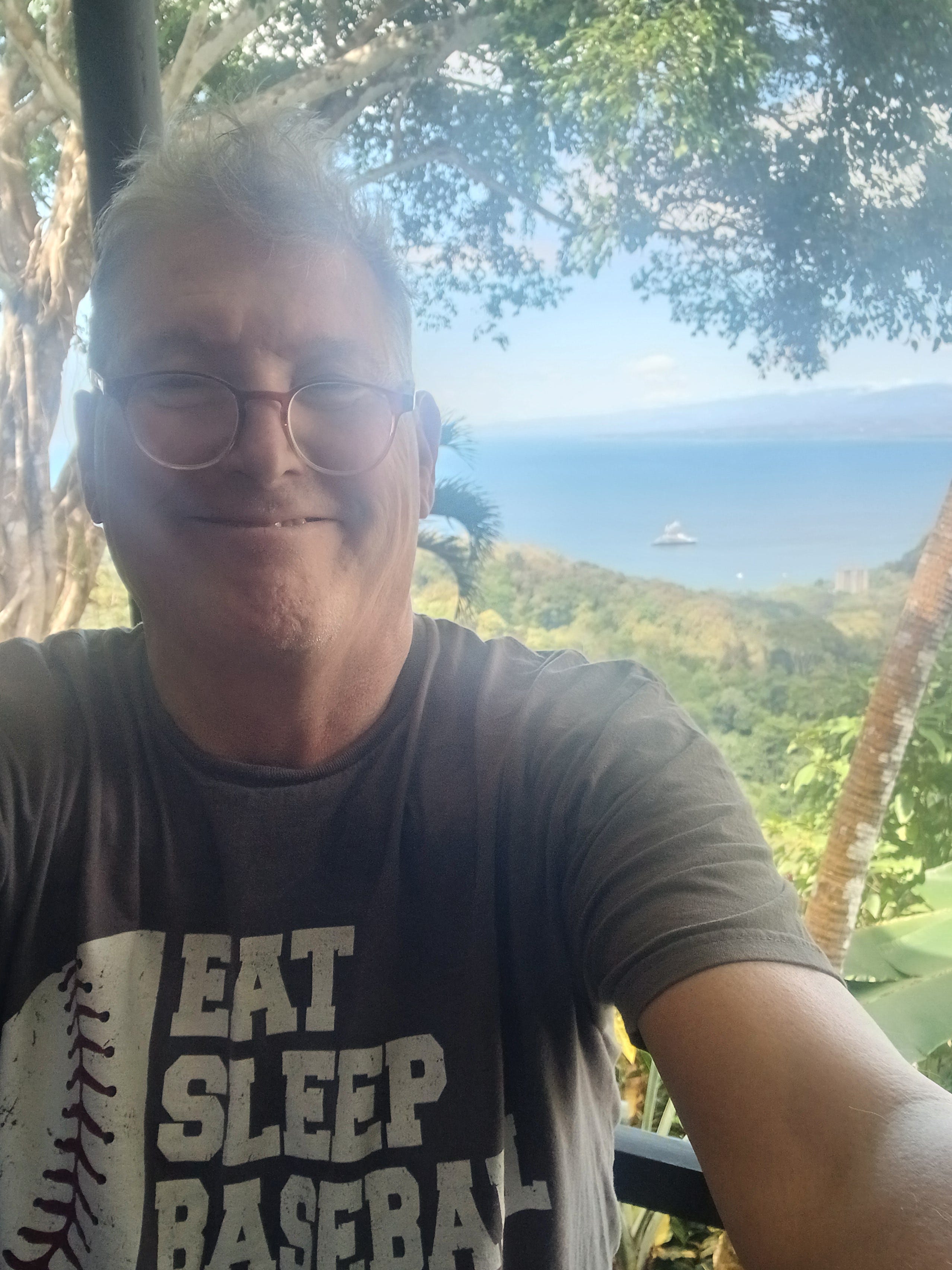
I’m down in beautiful Costa Rica for the coming week for a family wedding – and to escape the snow in Baltimore. It’s likely I won’t post again until next weekend, but there’s a presidential election here on Sunday and… well, maybe I just need to do this for a while.