
Brave New World
Ted Turner turned Atlanta into ‘America’s Team’ – Bobby Cox made them winners

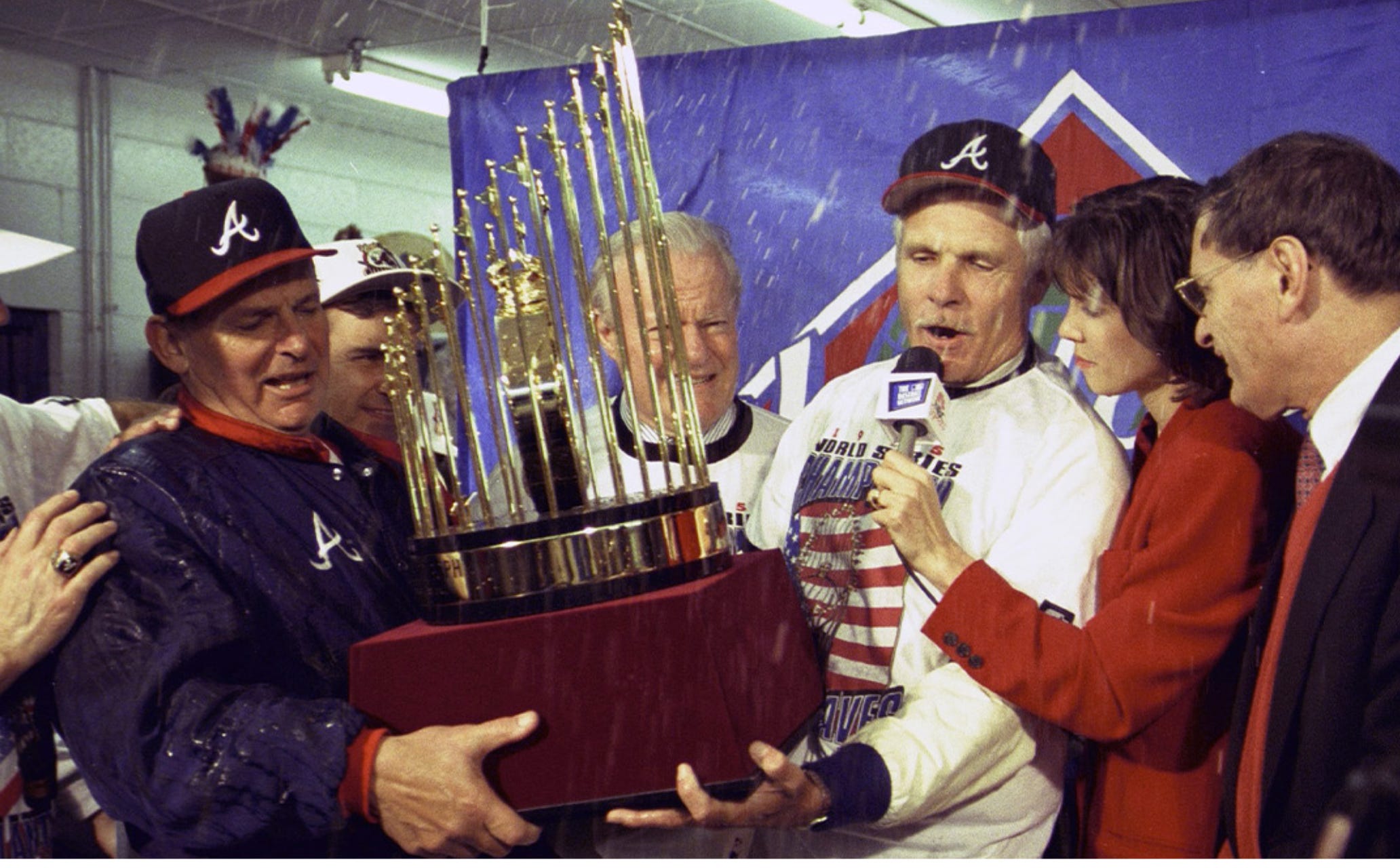
The Atlanta Braves lost two towering figures from franchise history with the passing of their greatest manager Bobby Cox; as well as Ted Turner, a true renaissance man and the team’s flamboyant former owner, who was undoubtedly one of the most influential media figures the US has ever seen.
Their combination at the head of the Braves organization in the 1980s and 1990s made for an unmissable, compelling story. When they died within days of each other, the team was on the road, but the Braves honored both men with a pre-game ceremony on Tuesday evening.
In an excellent column this week, Wendy Parker reminisces about the transformative effect the two men had on the ballclub and the city. She begins:
“When the forlorn baseball franchise known as the Atlanta Braves was drawing crowds in the three figures — you read that right — in the early 1970s, rumors were rampant that they may leave town.
“Not that many people in Atlanta seemed to care at that point, in what my former newspaper once dubbed “Loserville USA.”
“What did amuse many was a bumper sticker seen around town—”Go Braves and Take the Falcons With You.”
Parker also invokes Clayton Trutor’s 2022 book bearing that “Loserville” label but also the important sub-title “How professional sports remade Atlanta – and how Atlanta remade professional sports”, an acknowledgement of the challenges on-and-off-the field in creating a major-league American sports city.
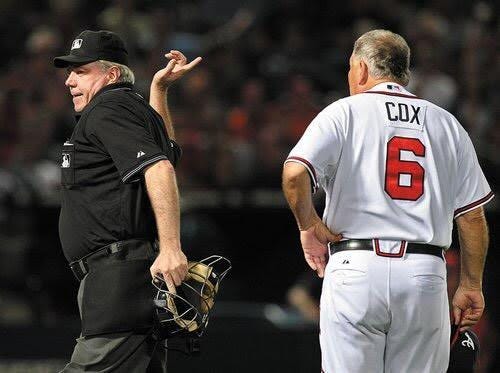
In another excellent column, Neil Paine crunched the numbers from Cox’s Hall of Fame career, concluding that he “ran a dynasty greater than its ring count.”
“[His] time at the Braves’ helm begs the eternal question of expectations versus reality: Would you rather have low expectations and mildly exceed them, or perpetually raised expectations each regular season that mostly go unmet every year in the playoffs?”
On that 162-game “record”, Paine writes:
“For Cox, the ejections were seldom quite as fiery or theatrical as those of [Earl] Weaver or Billy Martin, Cox’s mentor as a coach on the 1970s Yankees’ staffs. Instead, they were an outgrowth of his overall approach to managing a baseball team. Cox used ejections as a way to earn players’ loyalty, standing up for them and taking over the argument to protect them from being ejected instead. He also used them as a motivational tool. If the Braves were playing flat or lethargic, Cox would pick a fight with the umpire to wake up his players (or the crowd).”
Cox had 2,504 wins in his managerial career, the fourth-most in MLB history, behind only Connie Mack, John McGraw and Tony La Russa.
Ted Turner, for the record, managed the Braves for a single game, 49 years ago this week. He was just too big a character to be constrained by a dugout, as Andy Messersmith would likely tell you, after Turner – as a showman, the Bill Veeck of his time – “changed” the pitcher’s name to “Channel” to go with his uniform number 17.
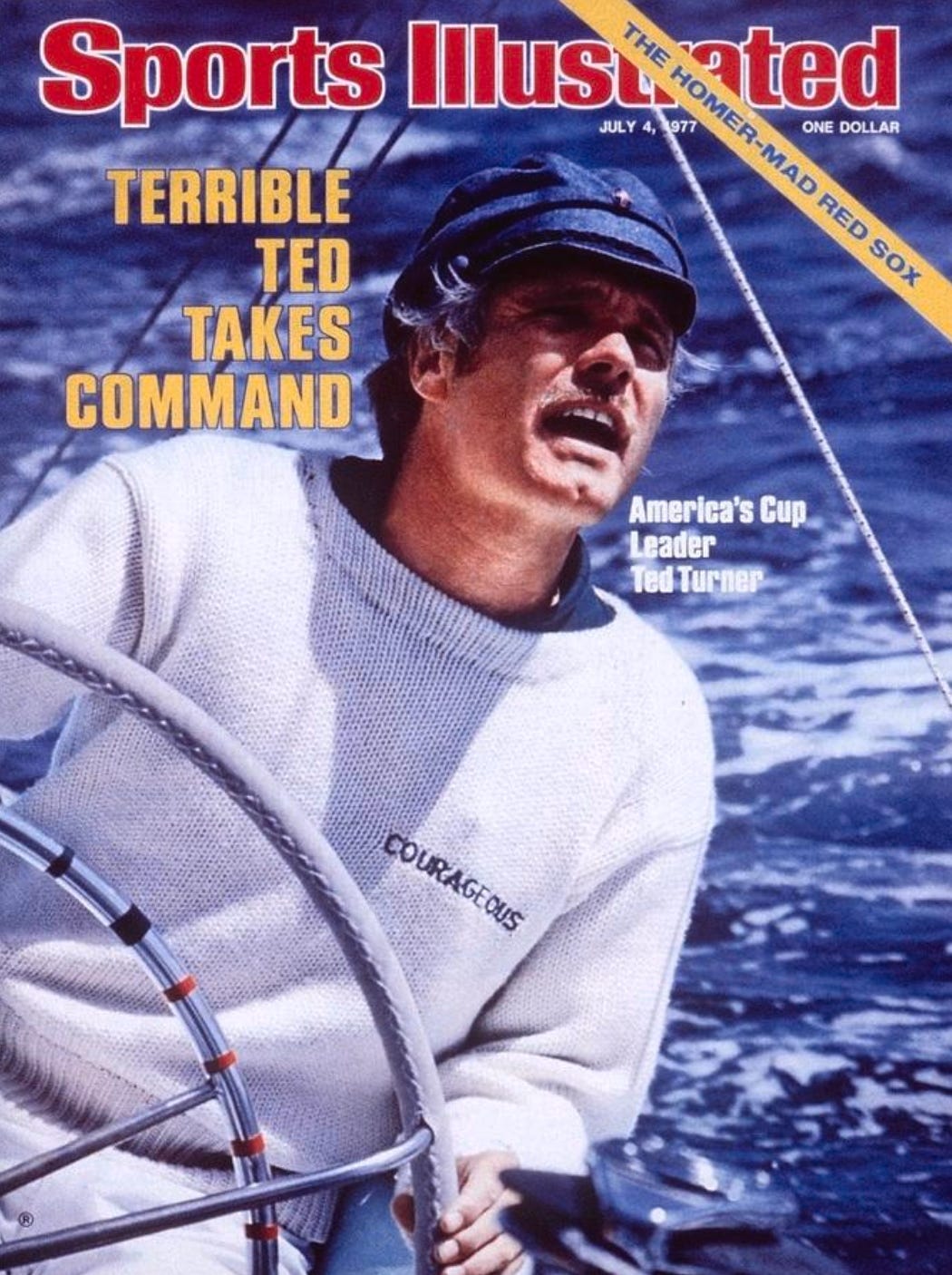
Turner will be remembered for having transformed the Atlanta Braves into ‘America’s Team’ but that was obviously only one aspect of a remarkable life. In a comprehensive obit – or, at least, as comprehensive as a thousand-odd words can be in describing a life like Turner’s – Bill Trott wrote for Reuters that:
“One nickname was not enough for a personality as roguish and bold as Turner’s. He was known variously as the “Mouth of the South,” “Captain Outrageous,” and “Terrible Ted.””
Turner himself once said: “If I only had a little humility, I’d be perfect.”
But Turner – who famously displayed bumper stickers on his vehicles saying “Save Everything” – was also a leading philanthropist and environmentalist; co-founding the Nuclear Threat Initiative with former Georgia Sen Sam Nunn and setting up the Captain Planet Foundation to work to protect endangered species.
Jeet Heer wrote at The Nation that “Ted Turner proved that even billionaires could be human.”
“In the third and final phase of his life, Turner, under [wife Jane] Fonda’s influence, turned his energy, and his wealth, to philanthropy. As Inside Philanthropy notes, “During his career as a big donor, Turner channeled an estimated $1.3 billion of his fortune into philanthropy, was an early adopter of the Giving Pledge, and along the way, helped redefine what wealthy donors could be expected to do.” He was particularly active in supporting the United Nations (to which he gave $1 billion, even as the US government was starving the international organization), arms control advocacy groups, and environmental causes. His approach to philanthropy had a direct influence on other big givers such as Warren Buffett and Bill Gates.”
When I first came to the US in 1982, there were two TV stations that carried baseball almost every day. The Braves were on Turner Broadcasting System, WTBS, the country’s first “Superstation”, while the Cubs and White Sox were on WGN – their callsign echoing “World’s Greatest Newspaper” for the Chicago Tribune.
In the current, often chaotic, business world of sports broadcasting, that seems like a quaint corner of certainty plucked from a totally different time. Come to think of it, though, so much from that time does.
See Also:
Soul Of The South (From January 2025)
An ‘Antidote To Politics As Usual’ (From January 2025)
Better Angels (From April)
**
Batting Around
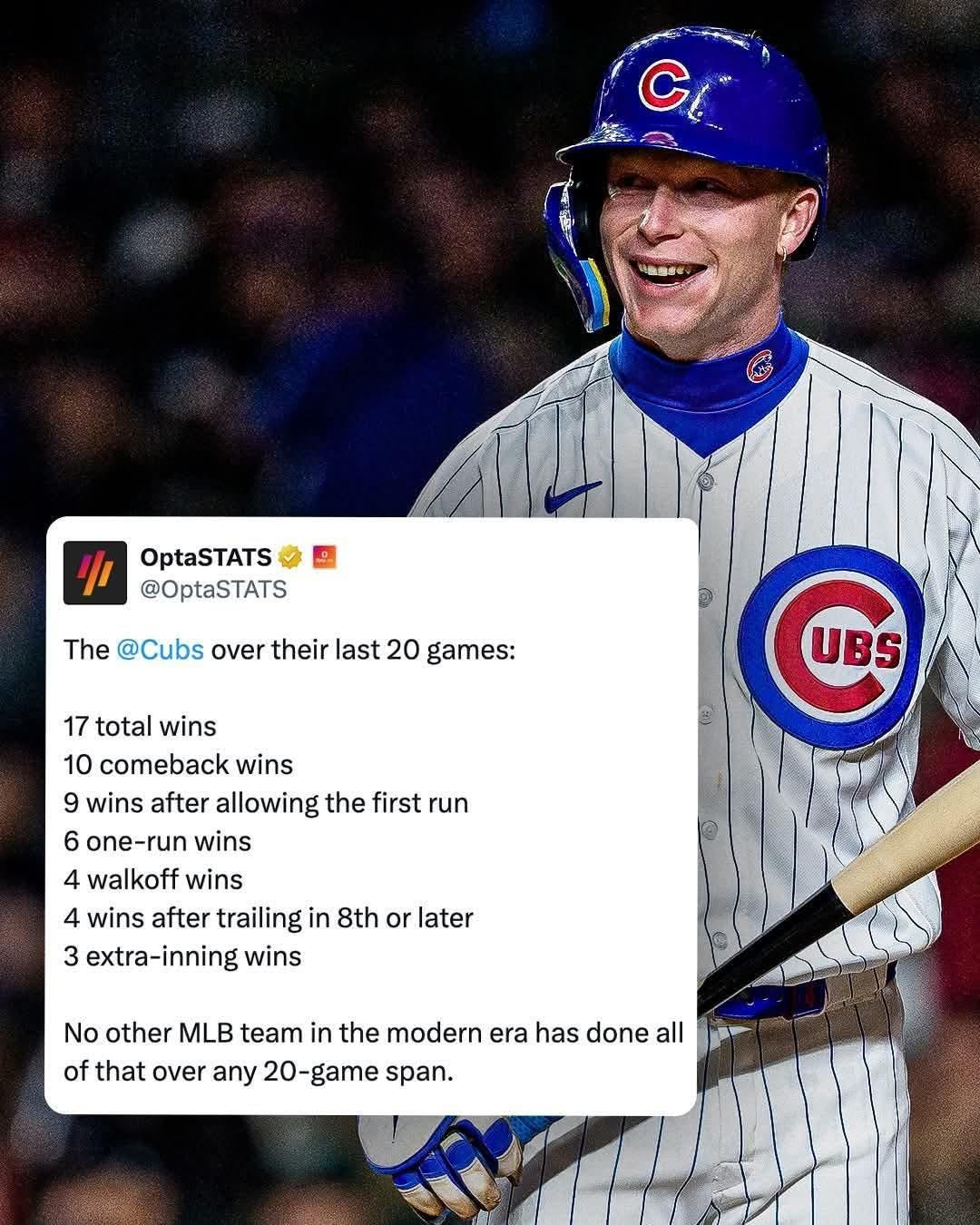
Cox and Turner would doubtless be happy to see that the 2026 Braves this week became the first team in all of baseball to notch thirty wins by beating the Cubs, who are themselves currently leading a wonderfully tight NL Central.
One striking – if maybe unsurprising – thing at this early stage, though, has been the consistent contrast overall between the Junior and Senior Circuits and what that could mean for the post-season.
In a recent piece for Outkick, Ian Miller wrote that this year’s American League “might be the worst in MLB history.”
“13 out of 15 teams in the American League would be either in last place or tied for last place in the NL Central.”
He went on:
“For most of MLB’s history, the two leagues didn’t play in the regular season. Meaning that the records in the AL or NL were mathematically fixed at .500 since every win meant a loss for another team in the league. But since the introduction of interleague play, the current .480 winning percentage in the American League would be the worst in the modern era.
“What makes this even more impressive is that it’s not as though there are a few teams well off the pace that have collectively dragged the league down. It’s just that the vast majority of the teams are aggressively mediocre.”
Normally, I’d say it’s still too early to write off a division, let alone a whole league, but for the AL Central in particular it’s hard to see how this changes anytime soon. (Also, don’t forget that the NL Central was always going to be freakishly competitive this season).
*
Paying The Cost To Be The Boss
Across both leagues, it’s been a difficult start for a lot of good teams, some of which also happen to be among baseball’s wealthiest, so it was interesting to see this piece from a couple of weeks ago about the cost of a ball game and the bigger economic picture.
“Baseball may be America’s pastime but it’s failing to uphold the American principles of equality and fair play,” said David Kass, ATF’s executive director. “MLB’s billionaire owners are among the superwealthy benefitting from Trump-GOP fiscal policies while fans must add rooting for the home team to the list of things that cost too much. Fairer taxes on the rich with the revenue invested in our communities would be a winning double play for workers and families.”
Meanwhile, the Savannah Bananas really have a lot to answer for…
See Also:
Going Bananas (From May 2025)
*
Groundbreaker
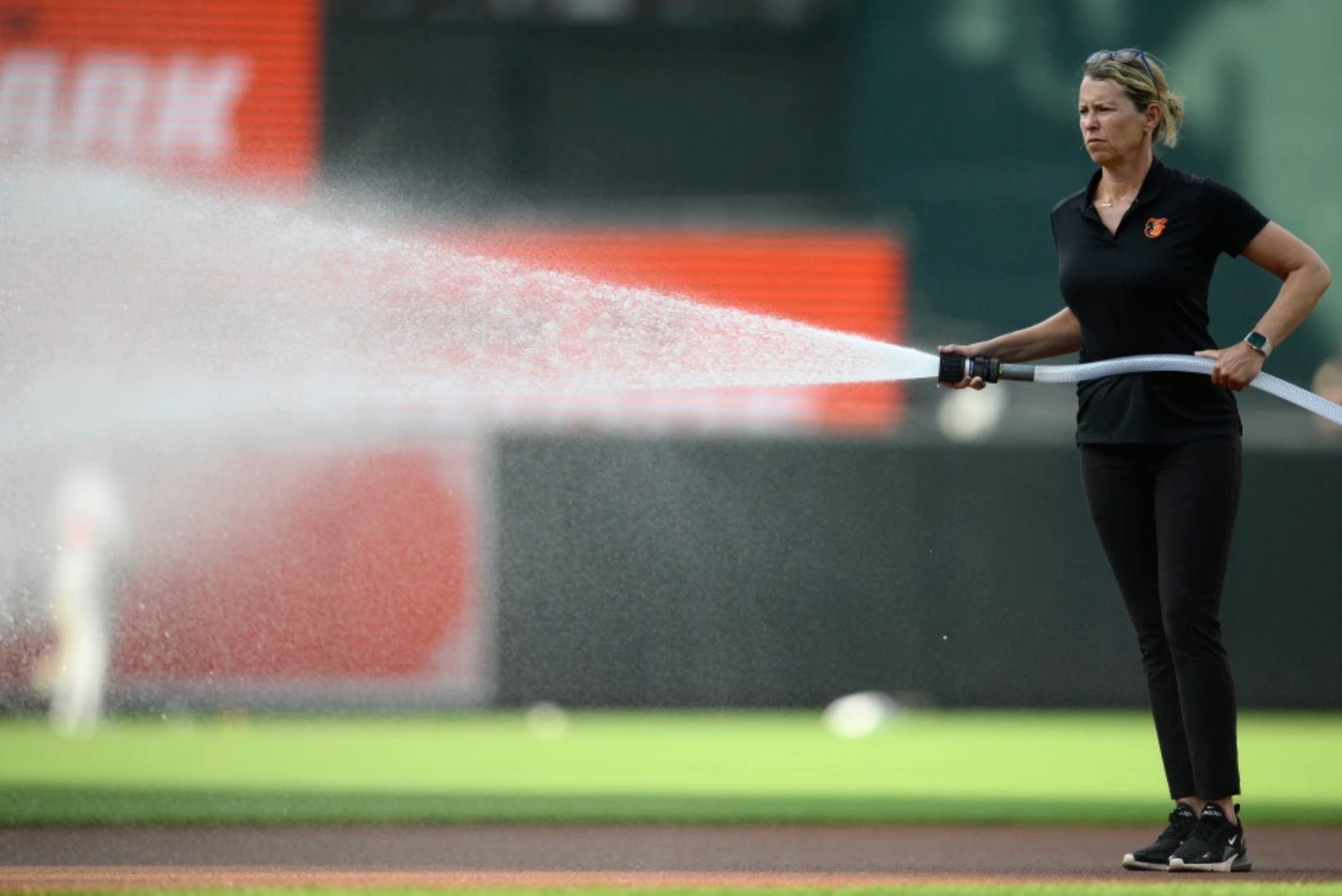
Nicole Sherry, the Baltimore Orioles’ head groundskeeper and only the second woman to hold such a position in MLB, is leaving Camden Yards after 20 years for a position with Maryland’s Department of Agriculture.
She reflected this week ahead of her final game to Andy Kostka at The Baltimore Banner:
“I don’t take it for granted, every single day,” Sherry said. “It’s been 20-something years here at this ballpark, but that young girl in me still remembers that field trip and the feeling I had when I walked out on that field. It’s really an honor and a privilege to take care of Camden Yards, and every single day, I had that within me. Yeah, the days get long sometimes, but to be able to walk out and be able to turn around and be able to look at things you helped create and grew, basically, that’s pretty special.”
“But Sherry is equally excited for her next opportunity. She is joining the state of Maryland as the assistant secretary of plant industries and pest management for the Department of Agriculture. It is, she said, a perfect fit.”
*
The schedule for the inaugural Womens Professional Baseball League was released this week. The season begins August 1st in Springfield, Illinois.
See Also:
History Behind The Plate (From August 2025)
*
The Old Landmarks
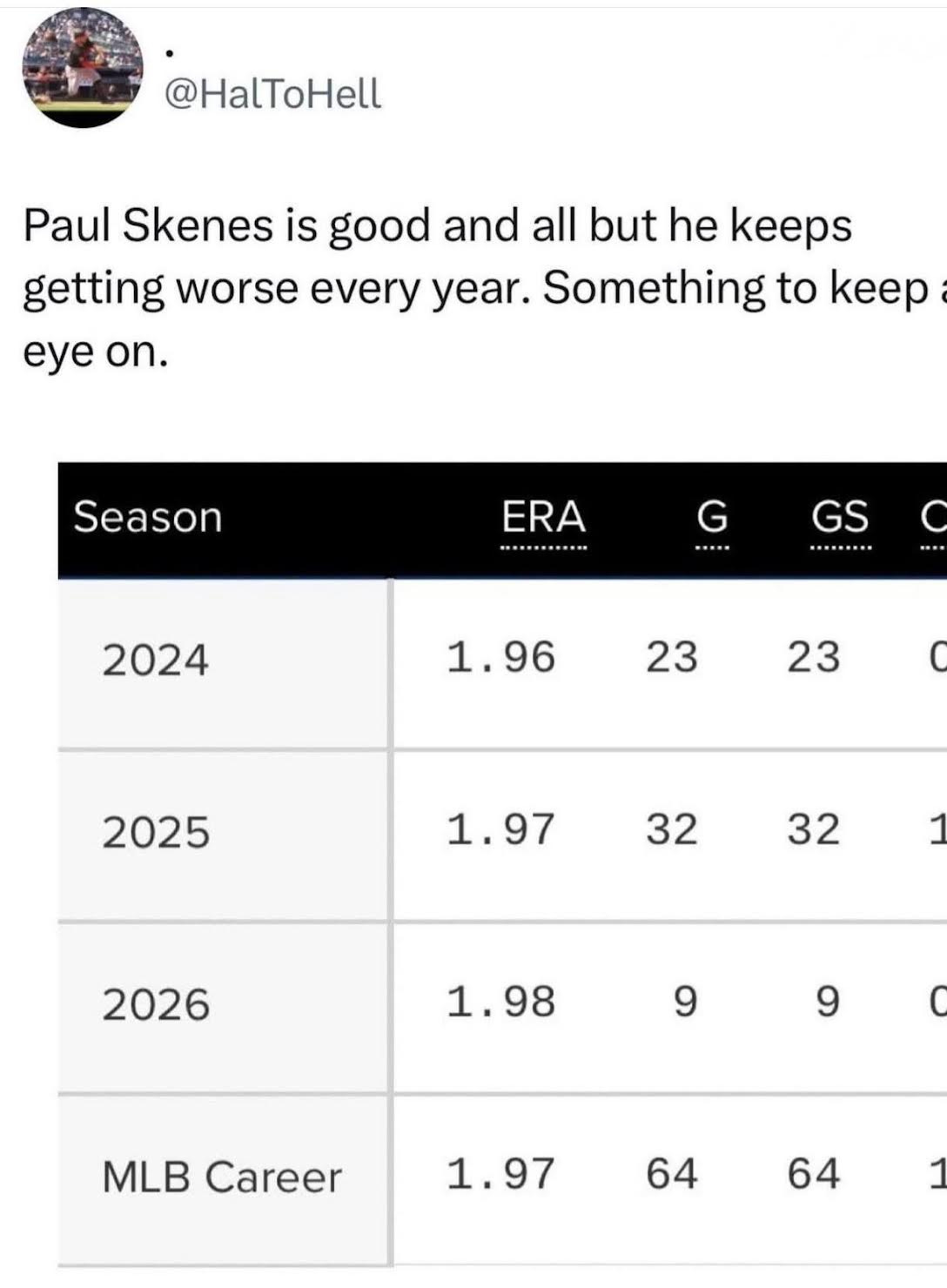
Although I suppose some folks will always be concerned by his obvious decline…
*
Voices Silenced
“Voice of the Yankees” broadcaster John Sterling died at the beginning of the month, aged 87. Brendan Kuty reported at The Athletic that Sterling had called 5,641 games by the time he retired in 2024; with more than 5,200 consecutive games since starting the job in 1989 until missing one in July 2019.
There’s talk that his famous “Theeee Yankees Win” call could end up being played after each home victory, right before Sinatra’s iconic “New York, New York”.
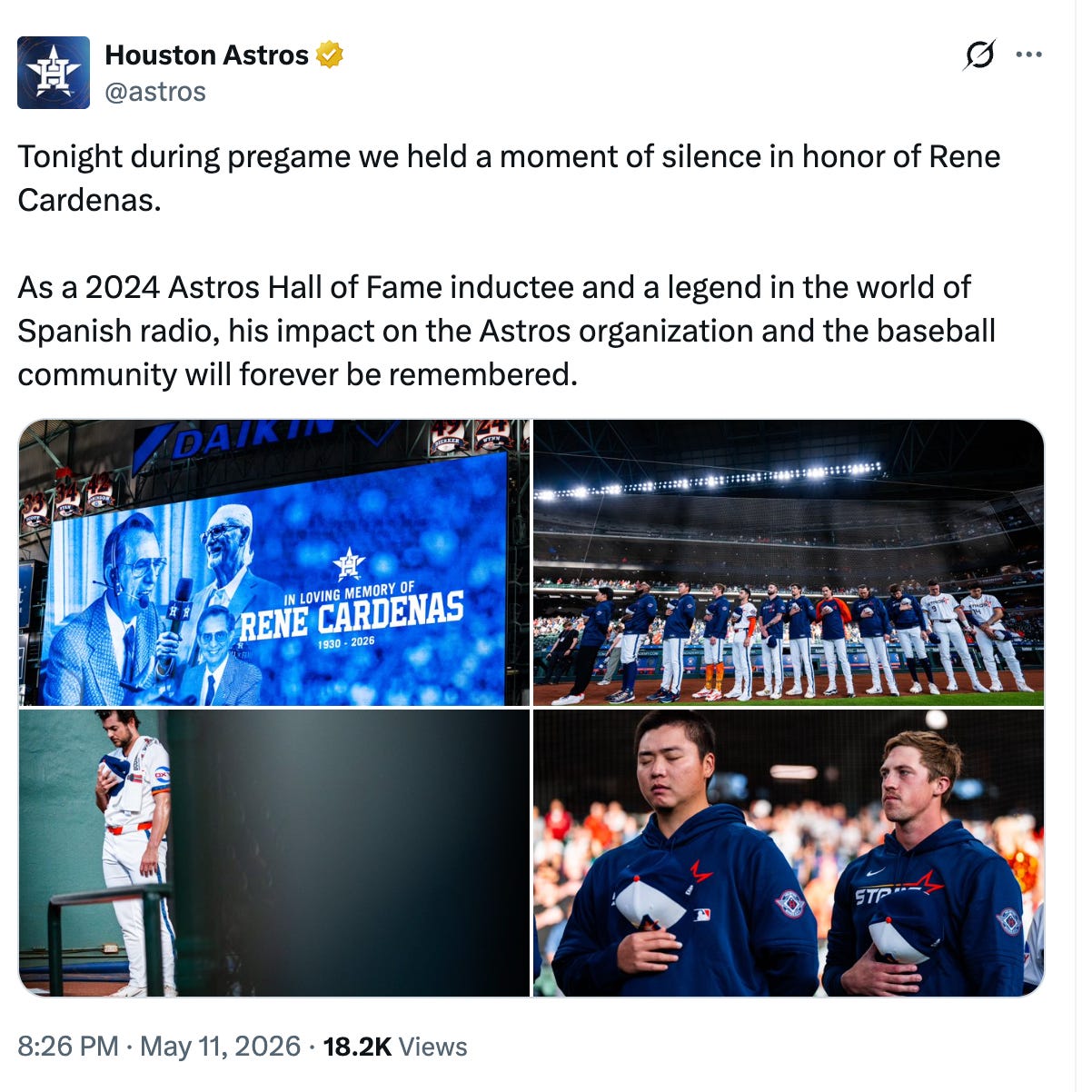
The death was also announced this week of René Cárdenas, the first Spanish-Language broadcaster in MLB history. He was 96.
According to Sean Keeley, Cárdenas began his broadcasting career in 1958, after the Dodgers relocated to Los Angeles and later went on to work for the Houston Astros.
See Also:
Last week’s Batting Around
Substack – Just Baseball (2026 season)
**
Reading The Field
“I never leave a game before the last pitch, because in baseball, as in life and especially in politics, you never know what will happen” – Richard Nixon.
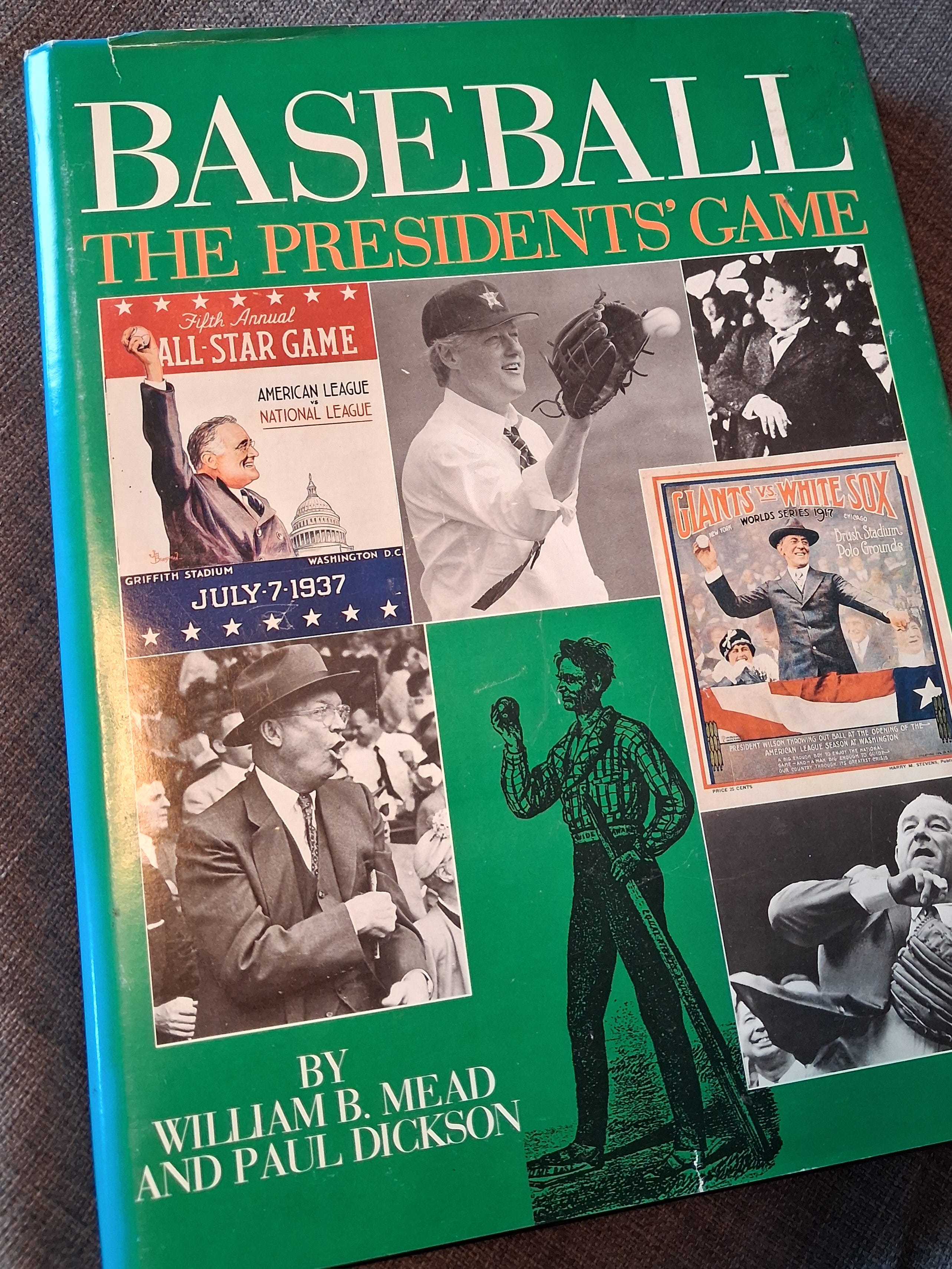
I’ve been dipping into this nicely-done volume published in 1993.
Baseball The Presidents’ Game, by William B Mead, a former UPI journalist who passed away in 2018 and Paul Dickson, who’s also the author, among other titles, of one of my favorite little baseball books:
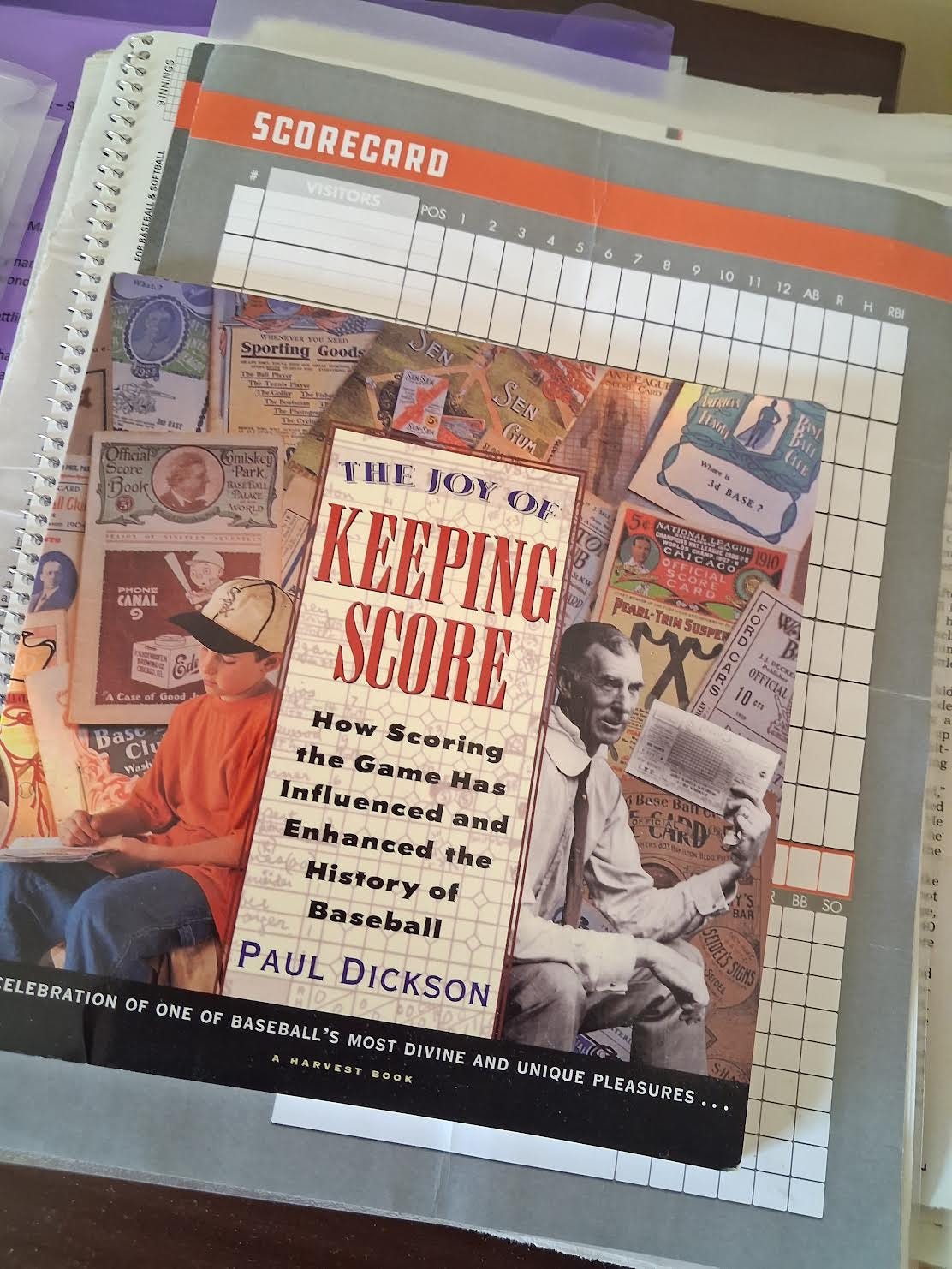
With a great black and white photo archive collection, The Presidents’ Game traces the connection between successive chief executives and the national pastime, from Washington at Valley Forge to how Bill Clinton’s wife rescued him from the Dark Side (he apparently rooted for the Cardinals before she changed his mind).
Along the way, there were of course some holders of the highest office who simply didn’t embrace the game as others did. As the book says:
“Not all presidents liked the game. Jefferson thought ballgames too violent and bad for the character. On the other hand, baseball wasn’t violent enough for Teddy Roosevelt.”
Our current incumbent appears to have something of an unresolved relationship with the game. By all accounts was a decent player at high school and college, but lately has said baseball is “not so hot”.
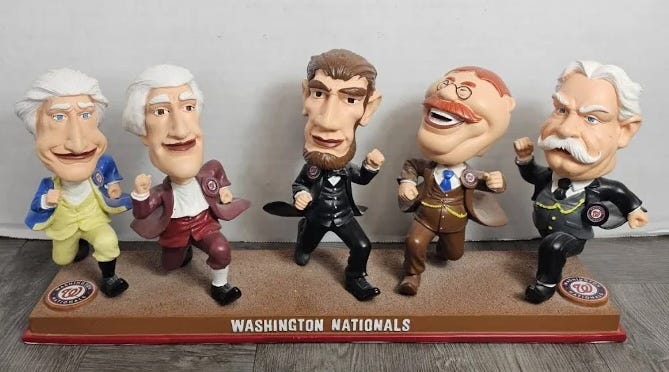
He recently had some visitors from Nats Park - where presidents officially are for sale (in this case about five hundred bucks on eBay…)
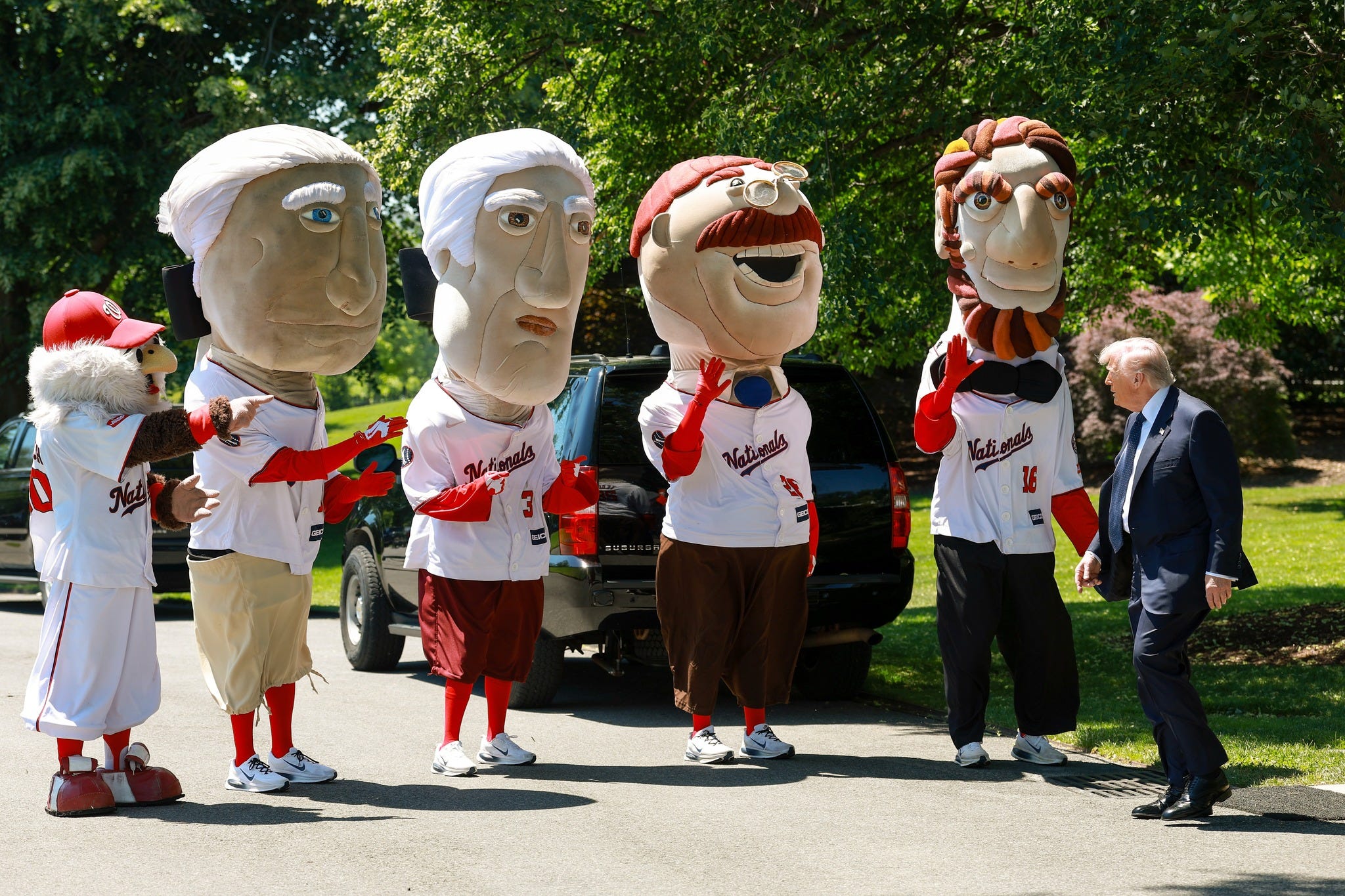
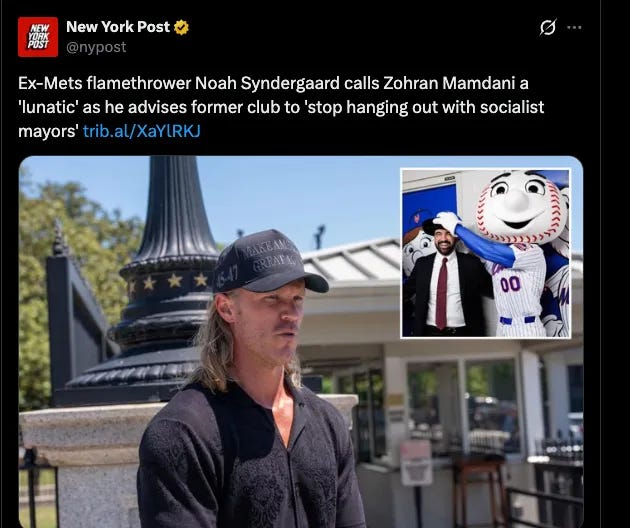
Trump used the occasion to depress some kids and former Mets pitcher Noah Syndergaard, who didn’t seem to mind…
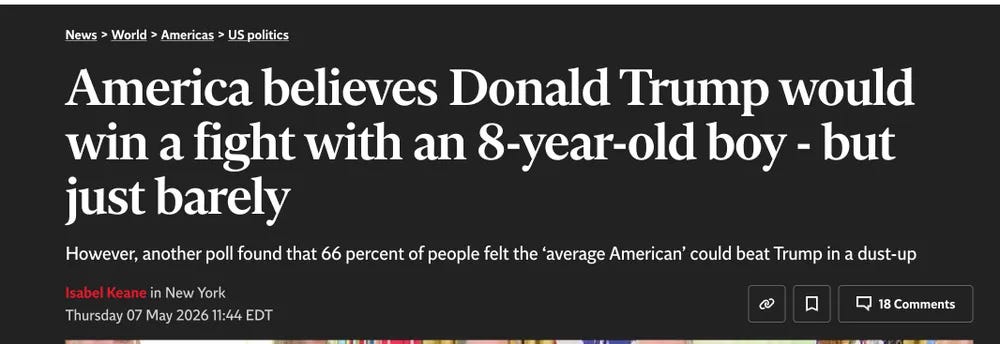
Meanwhile, do you ever get the impression opinion polls are just part of the whole prediction market now? Is there a Kalshi on this…?
See Also:
Hustle (From May 2025)
Which Pastime, Exactly? (From August 2025)
Last week’s Reading The Field.
**
Tickets, Please
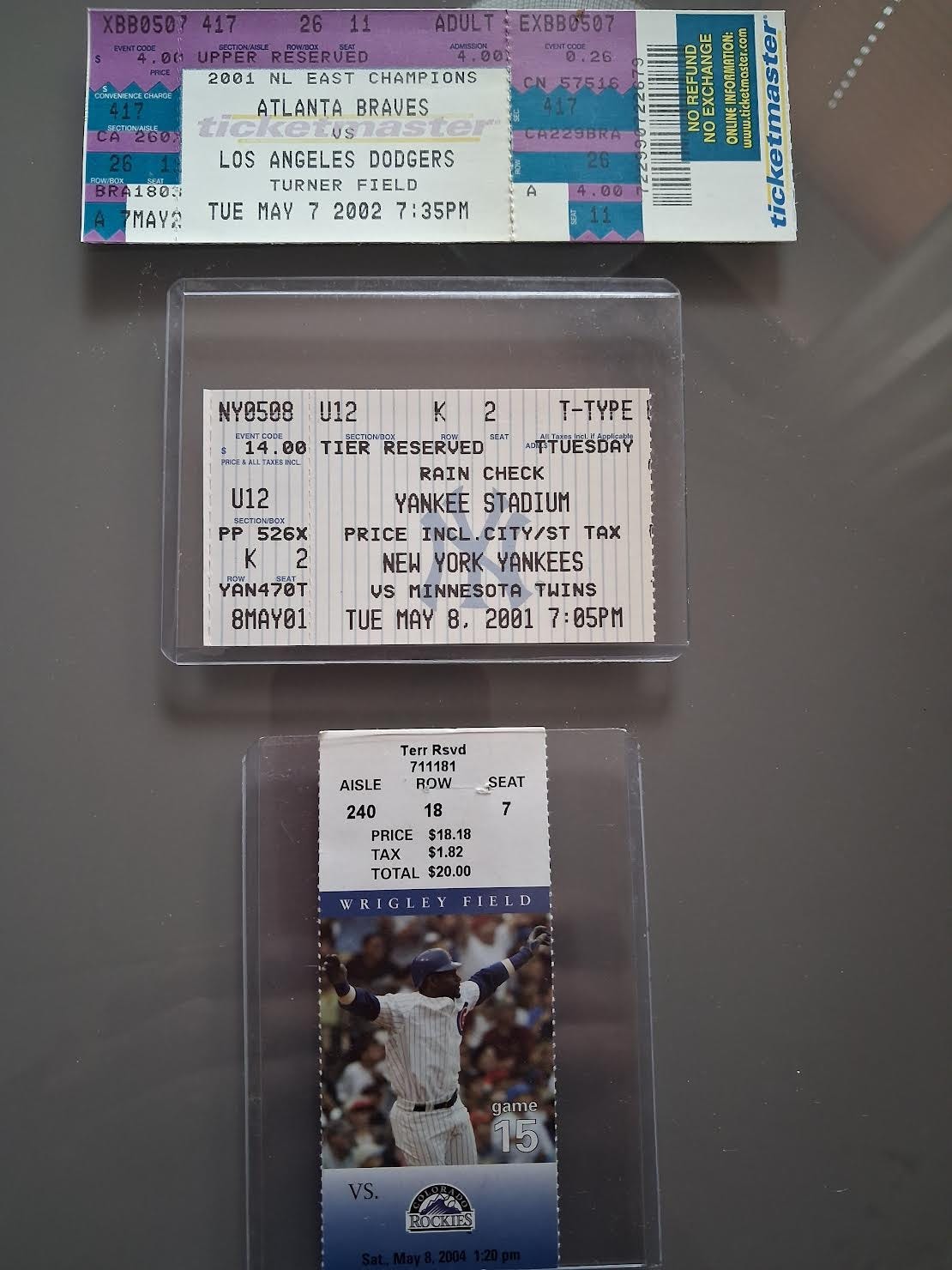
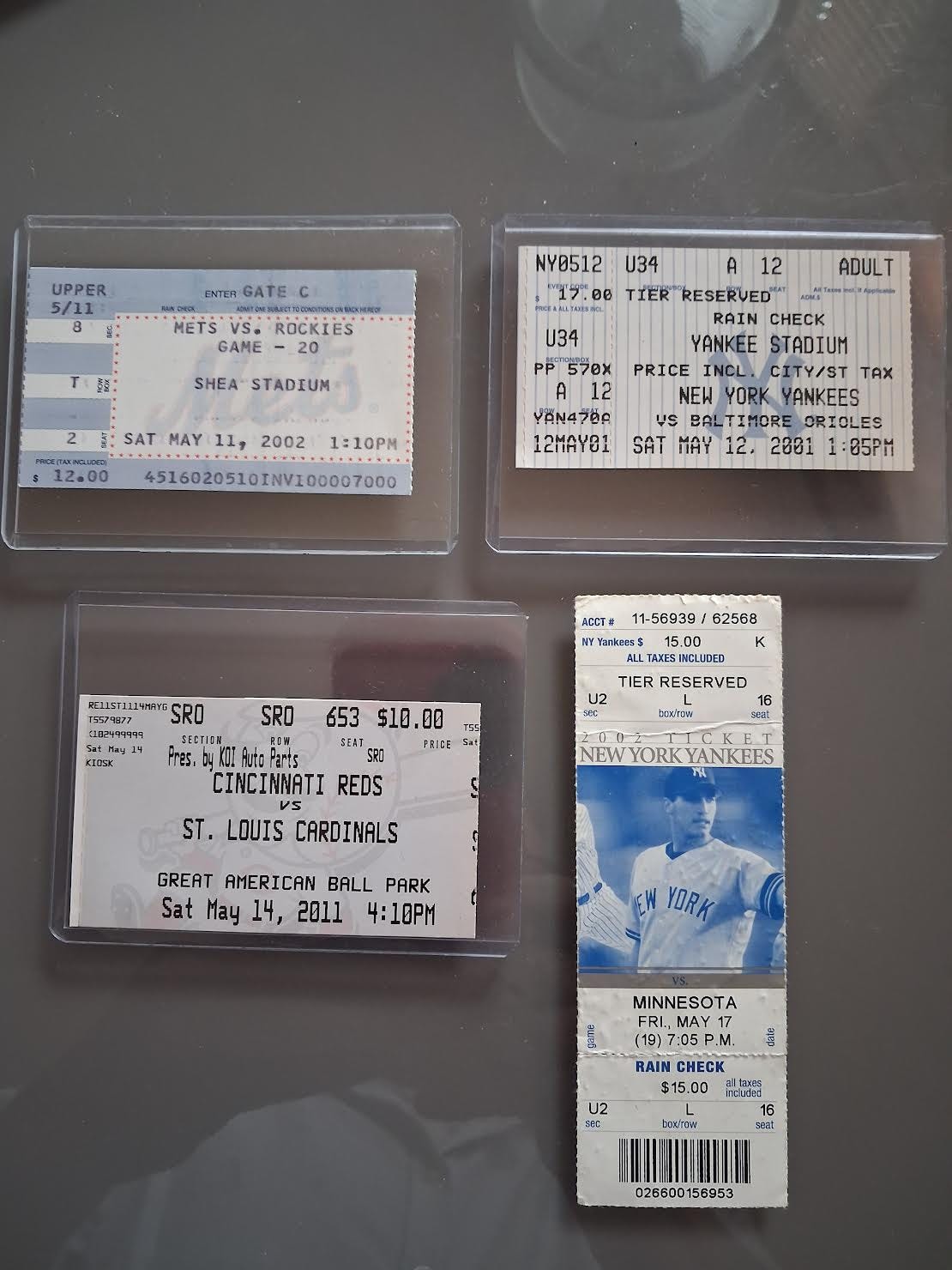
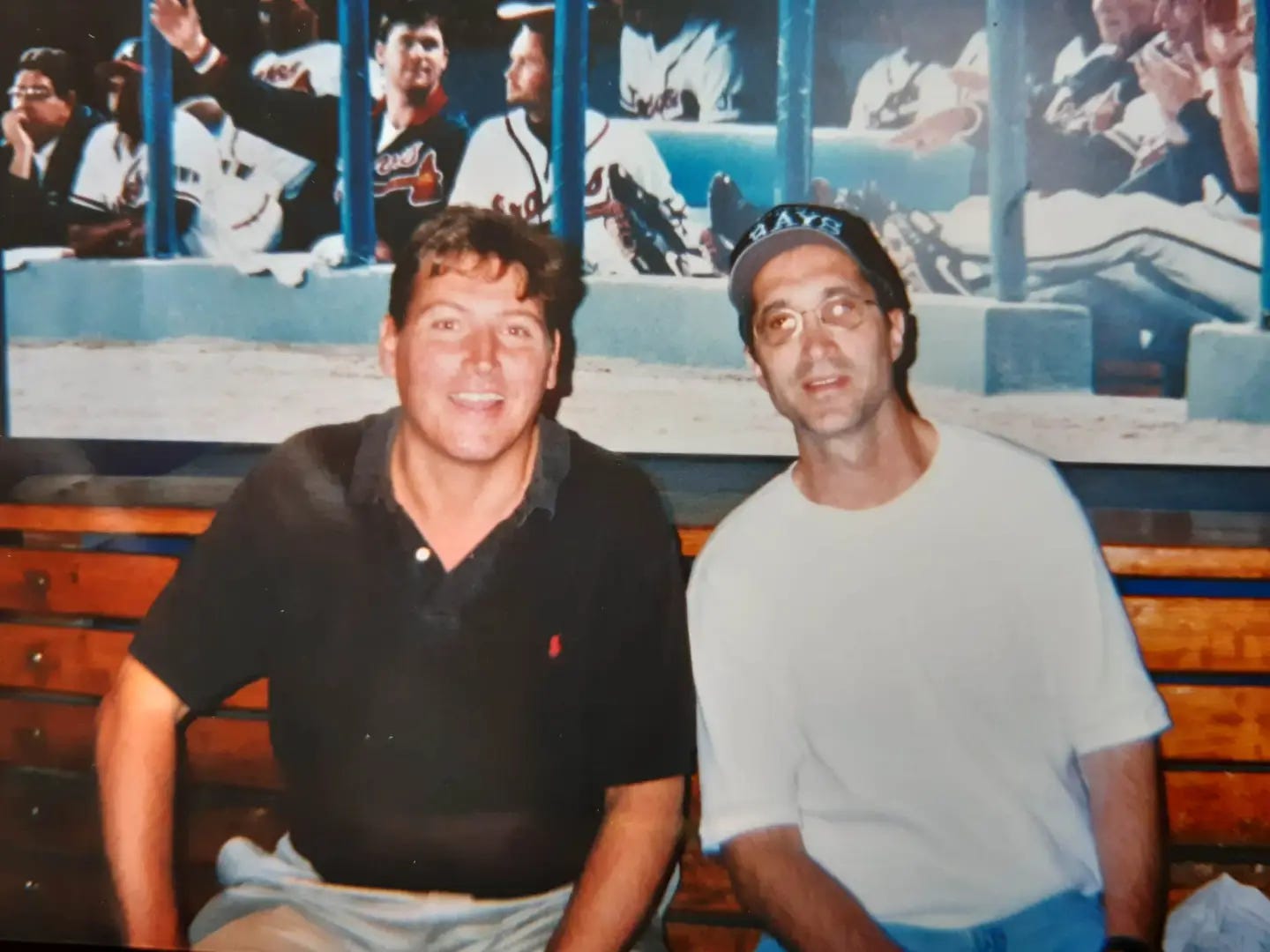
Appropriately enough last week’s selection starts off at Turner Field in Atlanta, and what’s still the longest game I’ve ever been to. The Dodgers beat the Braves 6-5 in 16 innings, with both teams almost running out of pitchers.
I went to the game with my friend Chris Lamb, who I wrote about recently.
See Also:
Last week’s Tickets Please.
**
Game Notes w/e 14 May
Wednesday 13 May, Baltimore Orioles v New York Yankees, Camden Yards, Baltimore, MD.
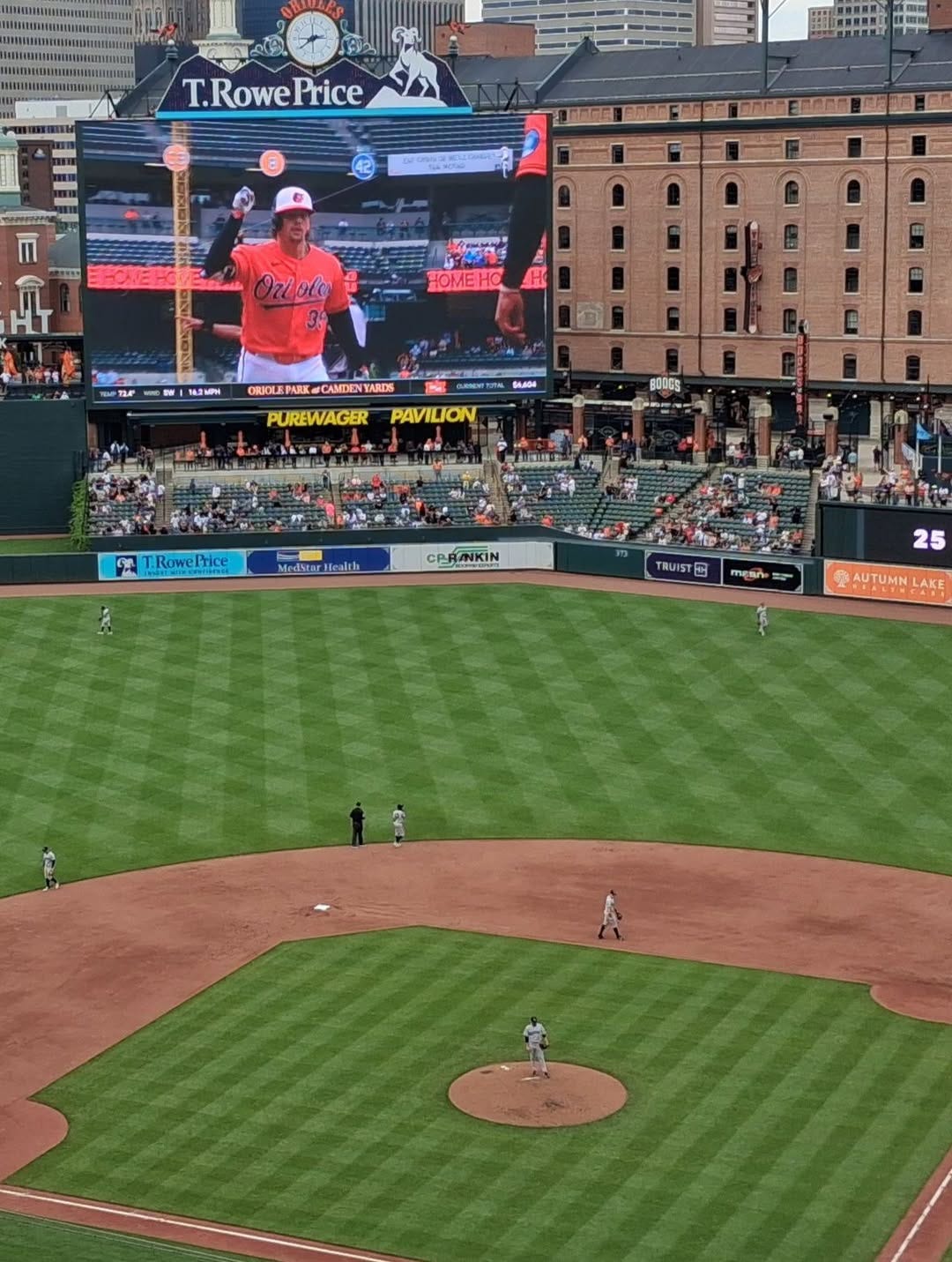
This one was moved up from a scheduled 6.35 start to 1.05 because of potential storms, so it was a nice relaxed afternoon for my first game back for a while.
A two-run homer by Adley Rutschman off Paul Blackburn in the fifth inning gave the O’s a 5-0 lead. They wound up winning 7-0 against a surprisingly ordinary Yankee team, who lost starter Max Fried after three innings and never looked like getting any traction against Kyle Bradish.
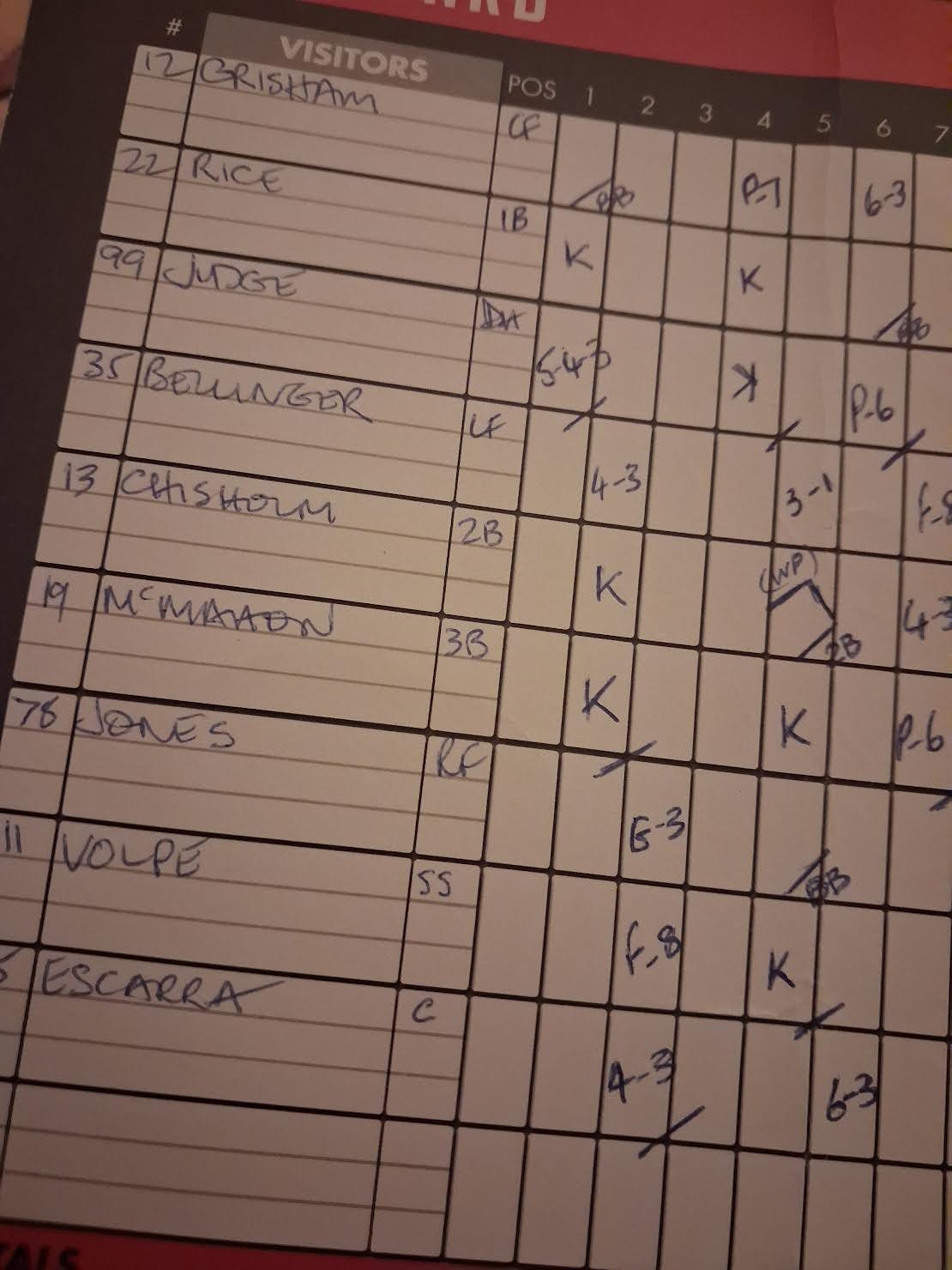
I had to say it, didn’t I... A guy on his way down to get a beer at the end of the 4th said to me “Hope we can hold on”. I replied “Looks good so far, Bradish is in a groove.” Then boom! the no-hitter’s gone with the second batter of the next frame.
Nevertheless, the groove continued and the O’s ended up posting their first shutout of the season.
See Also:
This season’s Game Notes so far.
***
As always, thanks for reading. During the regular season I aim to write a baseball-related post midweek and then a politics wrap at weekends. I’ll try my best to keep them separate but as you might expect, one has been way more sane than the other, especially at this confusing and crucial moment.
There’s a full States of Play archive here.
*
Finally, if you think you might like to take part in a simple Q&A for the project, reflecting on your memories of baseball and politics; along with where you think the country stands right now and where it might be headed, I’d love to hear from you, and you can email me at steve@statesofplayproject.com.
You can see the ones I’ve done over previous seasons here.
Here’s how it works:
You send me a brief bio – a few paragraphs telling me who you are, what you do, why you love baseball – as well as a couple of pics of yourself, ideally at a ballgame, and in return I send you nine questions, one per inning. You take as long as you like to email your answers back, then I’ll make sure you’re happy with the final draft before it’s published.
The first two questions are always the same for every participant: what was the first ballgame you went to and what do you remember about it? And then, what was the first election you voted in and what do you think have been the most significant changes in our politics since then?
I’ll round out the other seven questions based on your interests and what you tell me in the bio, as well as anything else you might like to talk about. It’ll finish up with where you think things might be headed.
Sound good? I look forward to hearing from you and hopefully see you at a ballgame.
*
Great work, as always, so much here to read/enjoy